Software Is a Long-Term Decision. So Is the Team Behind It.
Spud Software helps businesses understand and improve their operations. SpudERP is the technology. Trust on this page comes from the company itself: how long it has operated, where the team works, and how the partnership is run.
Established 1997. Built and supported in Michigan. Focused on real business operations.
You're Partnering With a Company, Not a Software Subscription.
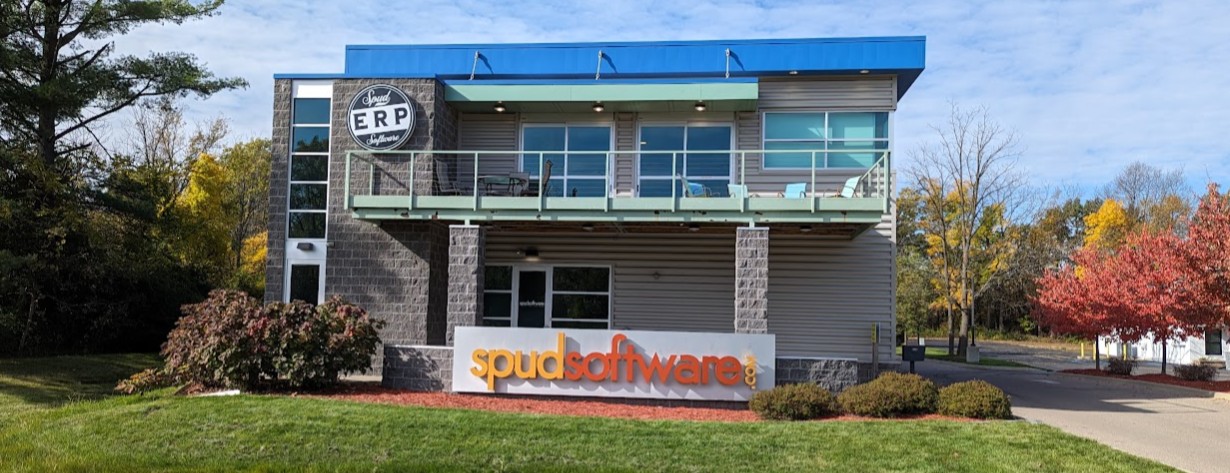
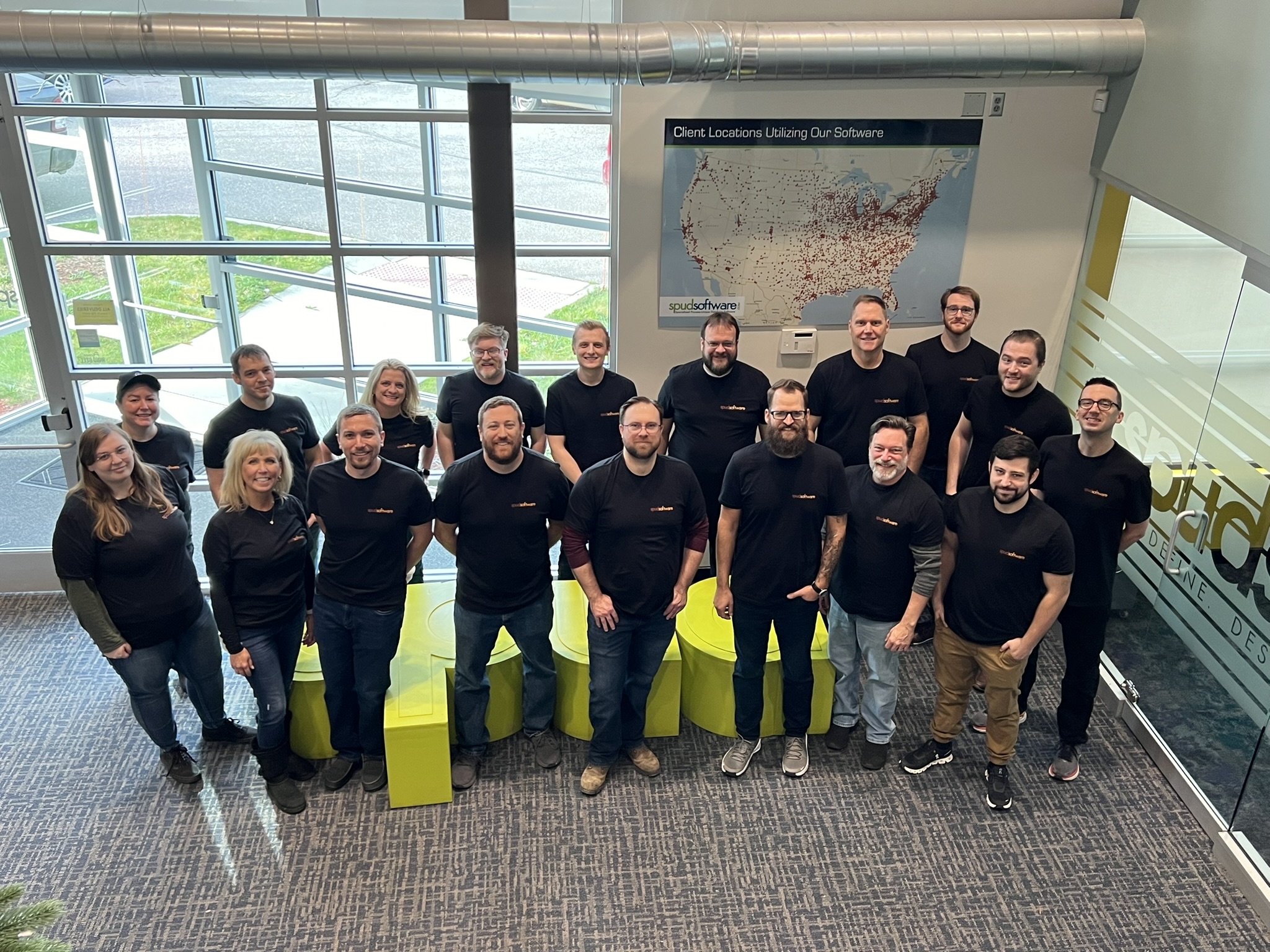
Spud has been operating since 1997. The platform is designed, built, and supported by the Spud Software team in Michigan.
Established Since 1997
Spud has been building business software for decades, not launching a newly created SaaS experiment.
Real Software Team
Business analysis, development, support, reporting, integrations, and continued platform development — one organization.
Michigan Based
Designed, built, and supported in Michigan — the people behind the platform work together as one organization.
Long-Term Mindset
The partnership model is designed around software continuing to evolve after initial implementation.
Established 1997 • 0 Years in Business • Grand Blanc, Michigan
Business Understanding Comes Before Software.
Spud's differentiator is not simply programming. The partnership begins with understanding how the operation actually works.
- Understand how the business actually operates.
- Identify where current systems and processes create friction.
- Determine the highest-value priorities.
- Use existing SpudERP capabilities where they fit.
- Configure or extend the platform where the business requires something different.
- Continue refining the system as operations change.
Understand
Prioritize
Configure
Build
Review
Evolve
The objective is not to force the business into the software. The objective is to make the software support the business.
More Capability Than a Single Hire Can Provide.
Business software often requires multiple disciplines working together. A Spud Software Partnership provides access to these capabilities through the Spud team and shared roadmap.
Access to the team. Not dependence on one individual.
This does not mean a particular employee is exclusively assigned to the customer or available on demand. It means the partnership draws on the combined capability of the Spud organization.
You Should Always Know What We're Working On — and Why.
Work operates through a shared prioritized roadmap with visibility into requests, priorities, and progress — not an open-ended promise of unlimited development.
Shared Prioritized Roadmap
Customer leadership helps determine which business outcomes and requests matter most.
Visible Backlog
Requests can be captured, classified, prioritized, and tracked.
Defined Work States
Understand what is requested, planned, underway, waiting, and completed.
Expected Delivery Ranges
Appropriate work can be classified into expected ranges rather than every request becoming an undefined promise.
Regular Roadmap Discussions
Priorities can be revisited as business conditions change.
Partnership / Value Reviews
Periodically review what was completed, what changed, what is underway, what value was created, and what should happen next.
The partnership is predictable. The roadmap is intentionally flexible.
The Roadmap Can Change Because Your Business Will.
A shared roadmap gives the customer control over priorities without requiring a new software contract every time the order changes.
Automate a manual production report.
A new customer creates a more urgent scheduling requirement.
Leadership reprioritizes the backlog and Spud shifts focus appropriately.
The software roadmap follows the business rather than an outdated annual project plan.
- Already-started engineering work may need to be completed appropriately.
- Larger initiatives may span multiple months.
- Priority changes do not imply unlimited simultaneous work.
- Spud determines appropriate engineering sequencing.
Clear Expectations Make Better Partnerships.
Confidence comes from clarity — not from fine print or overpromising.
Partnership Typically Provides Access To
SpudERP
Business analysis
Software development
Configuration
Reporting and dashboards
Integrations
Normal business-hours support
Ongoing enhancements
Shared roadmap
Regular roadmap and value discussions
Continued platform evolution
The Partnership Does Not Automatically Mean
Unlimited simultaneous development
Dedicated full-time personnel
24/7 support
Unlimited on-site service
Unlimited travel
Every requested initiative delivered immediately
Every existing system replaced on day one
Organizations requiring dedicated personnel, expanded support coverage, on-site services, or other specialized service levels can discuss those requirements separately.
Meaningful Progress Without a Big-Bang ERP Gamble.
The partnership on-ramp is designed to reduce implementation risk by focusing on understanding, prioritization, and meaningful early progress.
- Understand the operation
- Select high-value priorities
- Connect to useful existing systems where appropriate
- Configure and build the initial SpudERP capability
- Get meaningful functionality into use
- Continue expanding through the partnership roadmap
The first 90 days are an on-ramp — not a promise that every system in the company will be replaced in 90 days.
We're Not Starting With a Blank Screen.
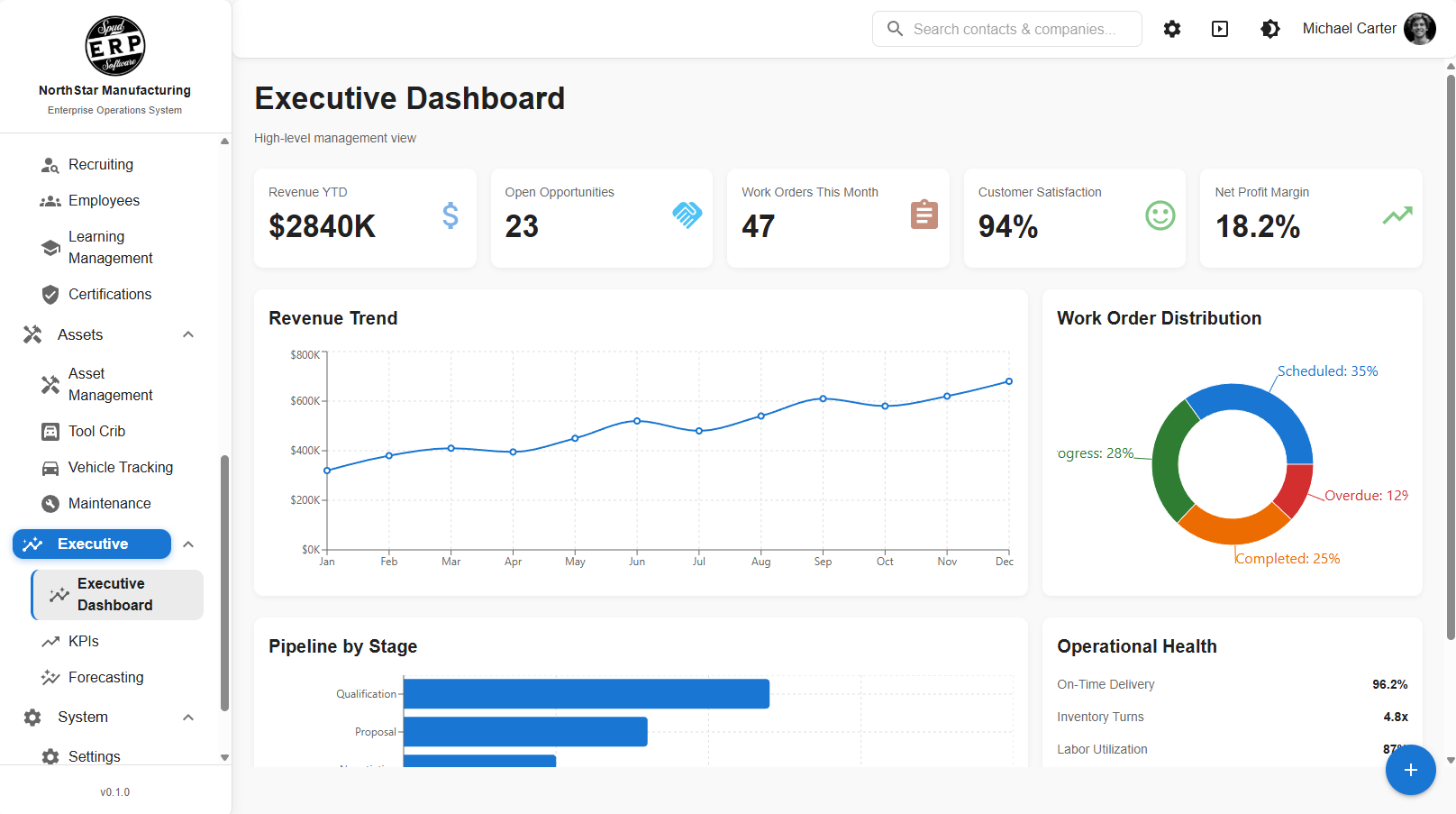
SpudERP already contains extensive capability across operational areas. Existing functionality gives Spud a head start — the partnership determines how that foundation is configured and extended for the customer.
Explore the full platform capability set on the dedicated platform page.
Business Software Requires More Than Features.
SpudERP includes application-level access control, accountability, and auditability built into how work is captured and tracked.
Users, roles, and permissions
Role-based access control
User-specific work assignments
Created-by and updated-by tracking
Approval accountability
Activity and status history
Audit trails and user-attributed actions
Your data remains yours. SpudERP is hosted in Azure's secure cloud environment for each of our clients. Detailed infrastructure, security, integration, and support requirements can be reviewed during the evaluation process.
The Goal Isn't to Finish the Software.
The goal is to keep it useful as the business changes.
New KPIs and reports
New workflows and departments
New locations and integrations
Process improvements
New customer and operational requirements
New technology needs
Year 1
Year 2
Year 3
Beyond
The software relationship is designed for ongoing evolution — not a one-time project with a finish line.
Questions Worth Asking Any Long-Term Software Partner.
These are neutral questions every executive should consider — not a comparison against competitors.
- Are we starting from scratch or from an existing platform?
- Who will learn how our business actually operates?
- How are priorities captured and changed?
- Can the software evolve without a new quote for every enhancement?
- Can existing systems remain where they still make sense?
- How will we see what is underway and completed?
- Are we dependent on one developer?
- How are permissions and accountability handled?
- What happens after the initial implementation?
- Can the platform support processes unique to our organization?
These are the questions the Spud Software Partnership model is designed to answer.
Real People. Real Platform. Real Operations.
Before You Choose Software, Choose the Relationship Behind It.
If your business needs software that will continue changing with the operation, let's talk about what you're running today, where the gaps are, and whether a Spud Software Partnership is the right model.